

House Hacking in Northeast Los Angeles
Live in Your Investment.
Build Toward Your Future.
Definition
House hacking is a real estate strategy in which an owner lives in one part of a property while renting out another portion to help offset housing expenses. This may involve purchasing a duplex, triplex or four-plex and living in one unit, buying a home with an accessory dwelling unit, or using another property configuration with rental potential.
01 — The idea
What House Hacking Means
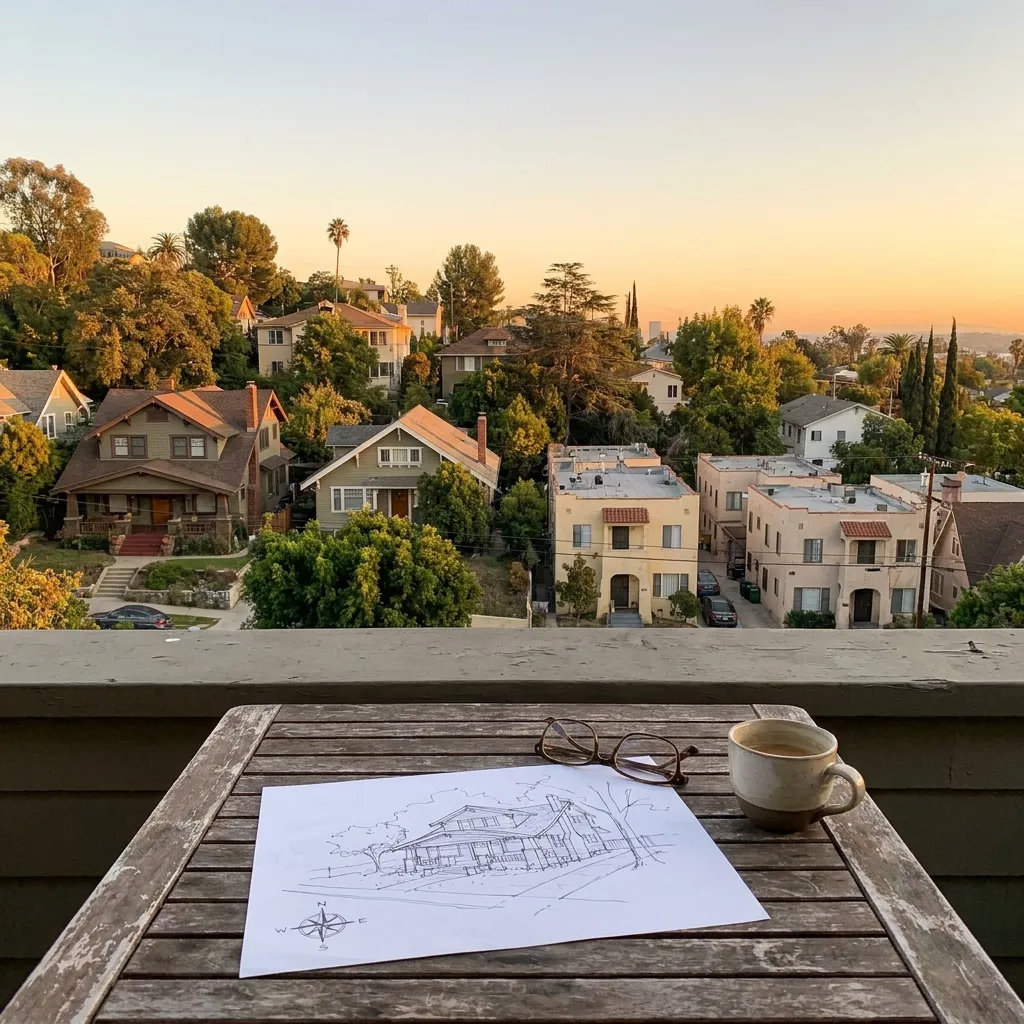
What if your next home could also help offset some of your housing expenses? House hacking can provide a practical path to homeownership by combining a place to live with income-producing potential.
Ken Shapiro helps buyers evaluate properties throughout Northeast Los Angeles, understand both the opportunities and the responsibilities, and decide whether house hacking meets their housing needs and long-term goals.
02 — Configurations
Comparing House-Hacking Property Configurations
Every configuration below trades off differently between how hands-on you'll be as a landlord, how much privacy you keep, and how much construction or verification is involved before you can rent. None of this substitutes for walking a specific property with Ken.
| Configuration | What It Involves | Trade-offs & Responsibilities | Who It Tends to Suit |
|---|---|---|---|
| Duplex, Triplex or Fourplex | Buying a property already divided into two to four separate units, living in one and renting out the rest. | You become a landlord to your immediate neighbors from day one — tenant screening, repairs and, on many Northeast LA buildings, rent-stabilization coverage for the units you don't occupy. | Buyers comfortable being hands-on and living in close proximity to tenants. |
| Single-Family Home With an ADU | Buying a property with an existing accessory dwelling unit, or one with room to add one, then renting the ADU while living in the main house — or the reverse. | More physical separation from tenants than a duplex, but building or finishing an ADU adds permitting, construction and timeline complexity before the unit can be rented. | Buyers who want more privacy than a duplex offers, or who already have a lot with room to build. |
| Home With a Separate Lower-Level Unit | A single-family home with a basement, garden-level or other secondary living area that functions as a de facto second unit. | Can shortcut the construction timeline of adding an ADU, but the unit's permitted-use status varies property to property and needs to be verified, not assumed. | Buyers drawn to a specific home or neighborhood who want rental potential without new construction. |
This is a regulated industry and figures like pricing, financing terms and rental income vary by property and change over time — Ken can talk through current specifics for a property you're considering, but none are listed here.
03 — How it works
How Ken Helps You Evaluate a House Hack
-
Talk through your goals
Your living situation, budget comfort and how hands-on you actually want to be as a landlord all shape which property configurations make sense to look at.
-
Identify configurations worth touring
Based on what's realistically available in the Northeast LA neighborhoods you're considering — not every configuration exists everywhere in equal supply.
-
Look past the listing photos
Rentability, condition, and how the unit split actually works day to day matter more than curb appeal for a property you plan to share with tenants.
-
Loop in your lender and other professionals early
Financing and permitting questions should surface before you're in escrow, not during it — Ken can help you know what to ask and when.
-
Make an informed offer
With that specific property's trade-offs already on the table, so there are no surprises after closing.
Worth Evaluating Carefully
House hacking can help make homeownership more financially manageable, but it also involves responsibilities, expenses and risks that should be carefully evaluated before purchasing a property. Let’s discuss the possibilities for your investment.
LIVE IN YOUR INVESTMENT
04 — Getting started
Start Your Search With Ken
You do not need to be an experienced investor to begin.
Whether you are considering your first home, a duplex, a property with an ADU or a small multifamily investment, Ken can help you understand your options and identify opportunities that deserve a closer look.
A short conversation can help you determine what type of property may fit your goals — and what steps to take next.
Ready to get started?

05 — Where to look
Finding the Right Property in NELA
House-hacking-friendly configurations aren't spread evenly across Northeast LA — these are the neighborhoods where Ken most often finds them.
-
Highland Park
Highland Park has the deepest small-multifamily inventory in Northeast LA, which makes it the most common starting point for a first house hack. The trade-off is competition: well-priced duplexes here move fast, and many are subject to the Rent Stabilization Ordinance, so the tenancy status matters as much as the price.
Borders Mount Washington, Eagle Rock, Glassell Park
Explore Highland Park → -
Eagle Rock
Eagle Rock lot sizes are the real story for investors. Where Highland Park is dense, Eagle Rock more often has the rear yard depth to support a detached ADU — which is a different and frequently better path to rental income than buying an existing duplex.
Borders Highland Park, Glassell Park, Mount Washington
Explore Eagle Rock → -
Mount Washington
Mount Washington rewards patience over volume. Multifamily is scarce, but homes with a separate lower-level entrance are common and often function as a de facto duplex. Slope, access and foundation condition drive value here more than square footage does.
Borders Highland Park, Glassell Park, Echo Park
Explore Mount Washington → -
Glassell Park
Glassell Park is where the price-per-unit math still works for a lot of first-time investors who have been priced out of Highland Park. The variance is wide though — two blocks can differ substantially in both value and rentability, which is exactly the kind of thing a comp sheet will not tell you.
Borders Eagle Rock, Mount Washington, Highland Park
Explore Glassell Park → -
Echo Park
Echo Park has the multifamily density investors want, but almost all of it predates 1978 and therefore falls under the Rent Stabilization Ordinance. That single fact changes the underwriting completely — in-place rents, tenancy history and buyout exposure matter far more than the asking price does.
Borders Silver Lake, Angelino Heights, Downtown LA
Explore Echo Park →
House Hacking Questions
What is house hacking?
House hacking is a real estate strategy in which an owner lives in one part of a property while renting out another portion to help offset housing expenses. This may involve purchasing a duplex, triplex or four-plex and living in one unit, buying a home with an accessory dwelling unit, or using another property configuration with rental potential.
Do I need experience as an investor to house hack?
No. Many people who house hack are buying their first home, not adding to an existing portfolio. Ken can help you understand your options whether you're considering your first home, a duplex, a property with an ADU or a small multifamily investment.
What property types work for house hacking in Northeast LA?
Duplexes, triplexes and fourplexes are the most direct route, but a single-family home with an accessory dwelling unit or a separate lower-level unit can work as well. Which one fits depends on the neighborhood, your budget and how hands-on you want to be.
Is house hacking right for everyone?
No. It can help make homeownership more financially manageable, but it also involves responsibilities, expenses and risks that should be carefully evaluated before purchasing a property — being a landlord to people who live next door or downstairs is a real, ongoing responsibility, not just a financing strategy.
How do I get started?
A short conversation with Ken can help you determine what type of property may fit your goals and what steps to take next — call, schedule a consultation, or sign up for house hacking updates.
Talk to Ken About House Hacking
Bring your goals and Ken will help you understand which property configurations are realistic for you.